
At the highest level, there are two primary types of draft beer systems: air-cooled systems and glycol-chilled systems. Air-cooled draft beer systems were the original method of dispensing draft beer and remained the standard until the development of glycol refrigeration. While this original format is no longer commonly specified due to its many design and performance limitations, its modern-day evolution is the draft beer wall.
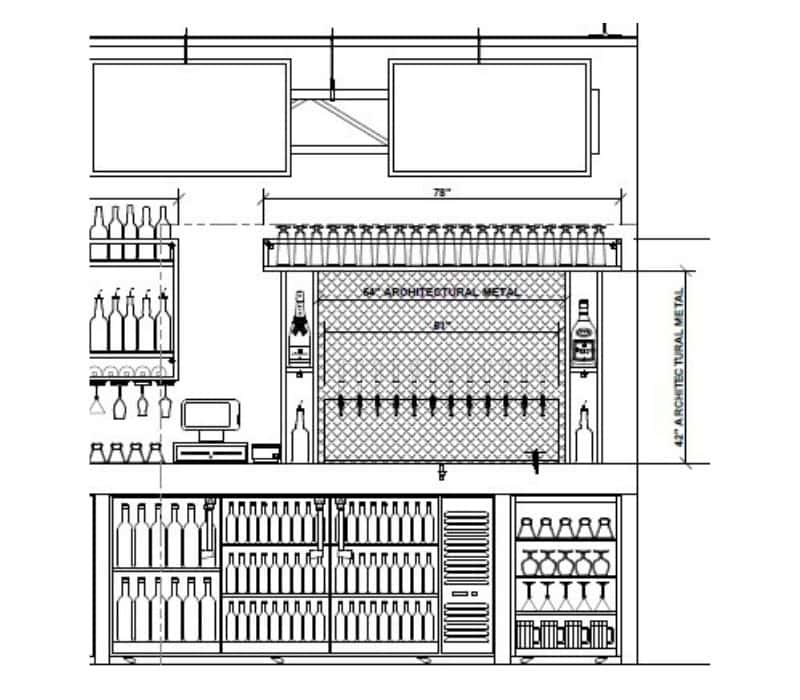
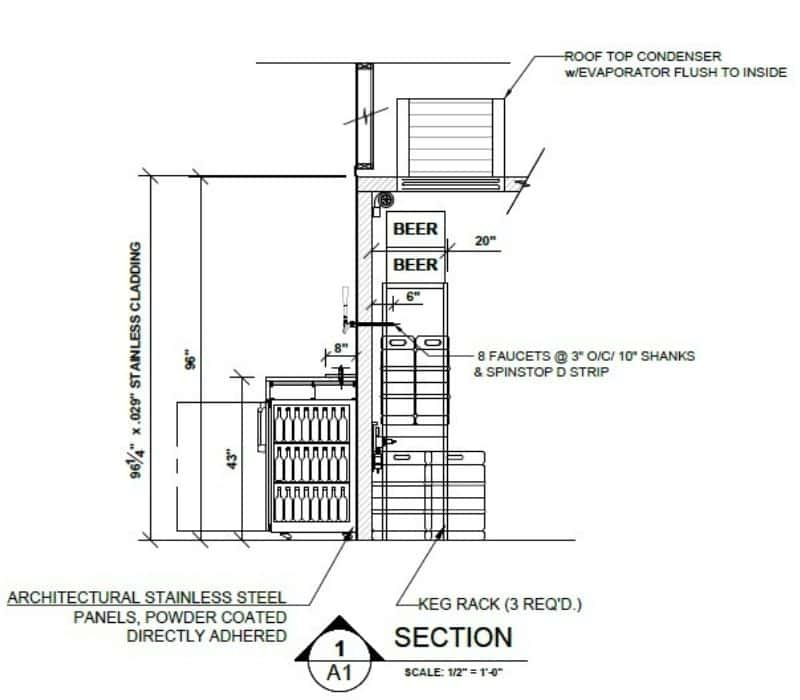
In a draft beer wall, one exterior wall of the walk-in cooler becomes fully integrated with the back bar, as shown above. The draft beer faucets are mounted directly through this wall, minimizing distance and simplifying temperature control. The guest-facing side of the wall is commonly finished with a thin layer of stainless steel or architectural metal, allowing the system to function as both equipment and a design feature.
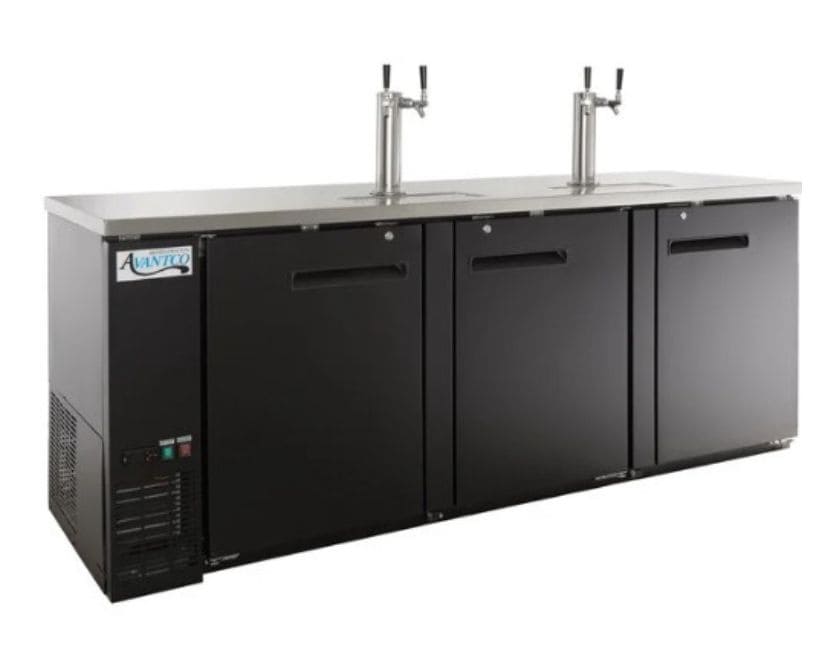
A kegerator is an air-cooled direct-draw draft beer system. The term combines “keg” and “refrigerator,” describing any refrigerated environment designed to keep beer kegs cold and dispense them through a CO₂-powered tap. Although its origin isn’t formally documented, the kegerator evolved naturally as refrigeration and draft beer technology advanced. It represents Ground Zero for all modern draft beer dispensing.
A traditional kegerator includes:
A refrigerated cabinet housing the kegs
Beer lines (PVC tubes) running directly to the faucet
A surface-mounted tower positioned on top of the cooler
A small blower to help maintain tower temperature
A CO₂ system for pressurization and delivery
Functionally, a kegerator is a scaled-down air-cooled draft beer system, and nearly every major back-bar cooler manufacturer offers pre-packaged commercial models. If you’re new to bar design, start with our complete guide to designing a bar.
Designer’s Note:
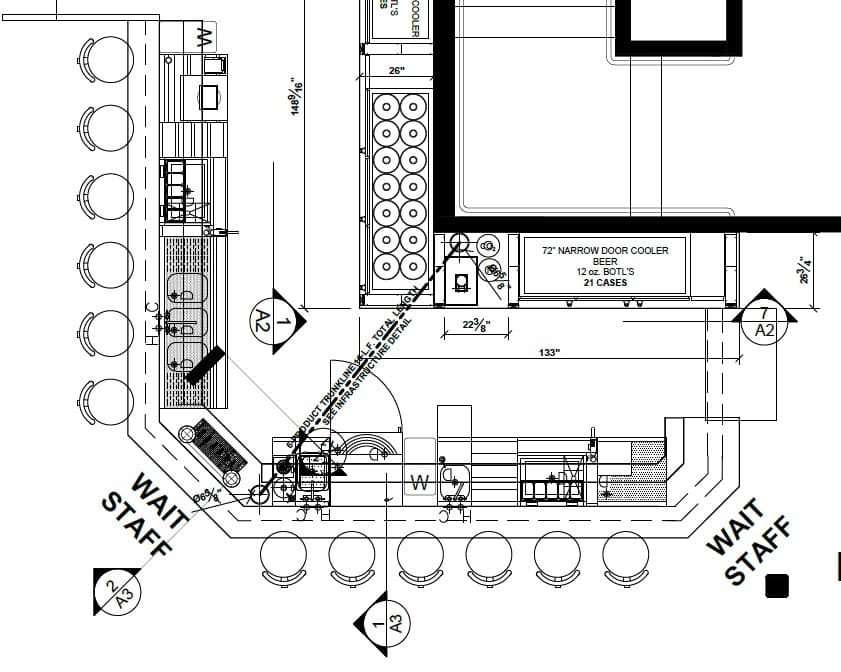
This project demonstrates the flexibility of the remote kegerator concept. By adding a mini-chiller, the draft tower can be placed where it best serves workflow and aesthetics — not where the cooler forces it to be.
Kegerators offer the chance to generate significant draft beer revenue with very little capital investment, which makes them appealing to many bar owners. They’re inexpensive, easy to install, and give operators a fast entry into draft service.
But from a design and performance standpoint, they introduce challenges.
In upscale bars, a bulky refrigeration cabinet beneath the back bar can break the visual lines and architectural rhythm clients expect. Early in my career, I wanted to offer my clients surface-mounted towers—clean, elegant draft faucets integrated into the back bar.
But traditional kegerators couldn’t support that idea.
The moment the tower was separated from the cooler, foaming took over.
Thanks to my friendships with experienced draft beer installers, I learned the physics behind air-cooled draft systems and the underlying reasons they struggle outside narrow conditions.
Yes.
Distance is everything in draft beer — but not because distance itself is a mechanical constraint.
Distance matters because distance and temperature are inseparably linked.
The moment beer leaves refrigeration:
Temperature begins to rise
Warmer beer produces foam
Foam destroys yield, consistency, and customer experience
Even a small amount of uncooled beer line — inches, not feet — introduces enough temperature gain to cause foaming.
So the correct question isn’t:
“How far can the tower be from the kegerator?”
The real question is:
“How long can the beer line stay cold once it leaves the cooler?”
With air-cooled systems, the answer is simple:
Only as long as the tower sits directly on top of the cooler.
Traditional kegerators cannot actively cool beer lines outside the cabinet.
That is why moving the tower even six inches destroys pour quality.
In other words:
Distance causes exposure.
Exposure causes temperature rise.
Temperature rise causes foam.
And this is precisely why air-cooled kegerators fail the moment the tower becomes remote.
A great draft system can still be undermined by poor station layout.
Draft systems must be integrated into the overall bartender station design to ensure efficient service and minimal movement behind the bar.
Below is a real-world example of a remote kegerator system. The front elevation shows how the glycol-cooled tower integrates seamlessly into the back bar, while the plan view illustrates the keg layout and mini-chiller configuration behind the scenes.
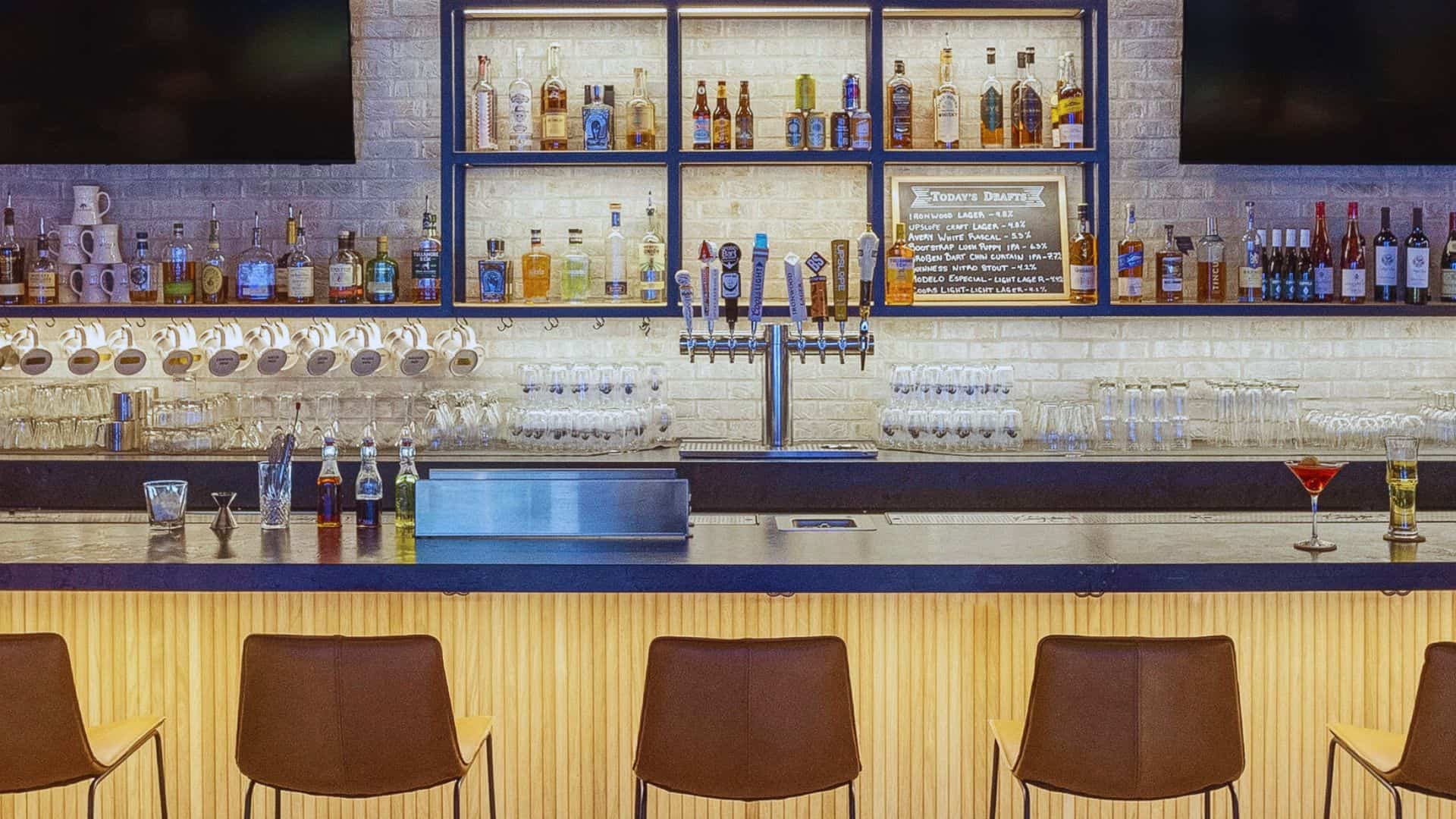
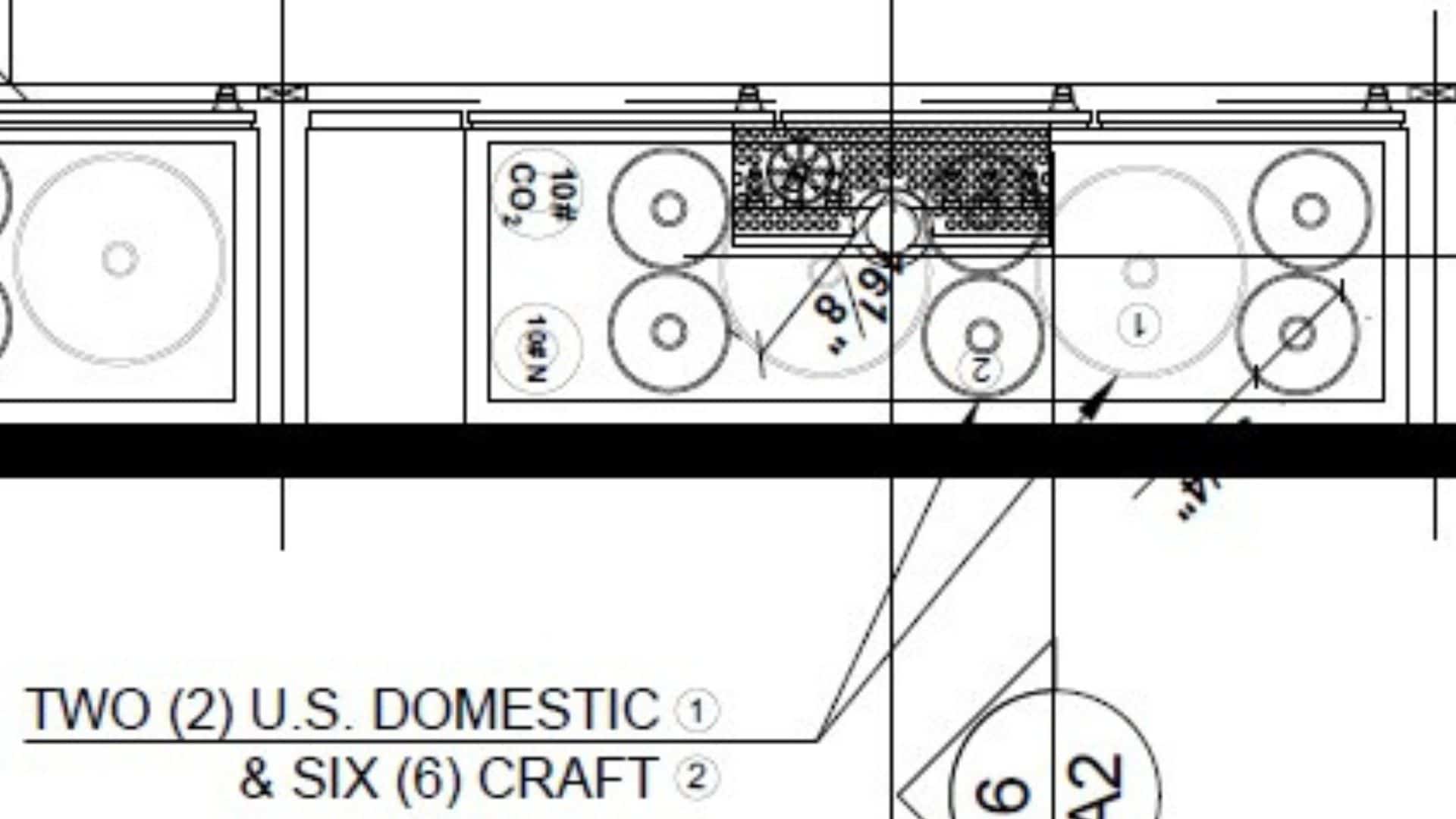
When the draft tower is separated from the cooler, air-cooled delivery fails instantly. This is truly a game of inches, and placing the tower even slightly away from the refrigeration cabinet violates every principle of proper draft beer delivery.
But there is a solution: glycol cooling, specifically in the form of a mini glycol chiller.
Mini-chillers are compact versions of the glycol power packs used in long-draw systems. They are economical, powerful, and actively chill beer lines from keg to faucet.
This creates what I call a Remote Kegerator — a hybrid system combining:
A back-bar cooler (like a traditional kegerator)
A mini glycol chiller
A glycol-cooled tower
Functionally, it behaves like a miniature glycol draft beer system.
Aesthetically, it gives designers access to virtually unlimited glycol tower styles, far beyond the limited and often unattractive air-cooled tower options.
The Remote Kegerator solves the two biggest problems of traditional kegerators:
Beer warming between cooler and tower
Poor tower aesthetics in upscale environments
Whether air-cooled or glycol-assisted, kegerators typically max out at eight products. This limitation arises from keg size and cooler capacity, not draft tower hardware.
Half barrel (15.5 gal, ~16⅛″ diameter)
Slim quarter barrel (7.75 gal, ~11⅛″ diameter)
Sixtel (5.16 gal, ~9⅜″ diameter) — the modern game-changer
Half barrels & slim quarters: 4–6 products
Sixtels: up to 13 kegs, enabling:
8 beers on tap, and
5 cold backups
Backup stock is essential.
A keg must sit at 38°F for 24 hours before tapping or foam will be severe.
For bars without walk-in coolers, this backup capacity is critical.
For bars with walk-ins, an 84″ cooler can confidently serve up to 10 products while maintaining adequate reserves.

Low cost
Low maintenance
Easy installation
High flexibility for small operations
Product variety capped at 8 taps
Frequent keg changes for busy bars
Temperature instability if the tower is not on the cooler
Aesthetic constraints in high-end bar designs
Kegerators are effective for small, moderate-volume bars — but they are not scalable for high-performance draft beer programs unless upgraded into remote kegerators.
Kegerators begin to struggle when the operational demands outgrow what a back-bar cooler can reasonably support. They become problematic when:
The bar needs high-volume throughput
The operator wants a larger, more flexible tap list than the cooler capacity will allow
Frequent keg changes start disrupting service and slowing bartenders down
In these situations, the system is simply being asked to do more than it was designed for. Without glycol assistance and additional cold storage capacity, kegerators reach their practical limits quickly. As volume and product variety increase, a true glycol-based draft beer system becomes the more reliable and scalable solution.
If you decide to purchase a kegerator, I strongly recommend choosing 24-inch deep back-bar coolers. Krowne offers a very nice lineup of self-contained back bar refrigeration. These units provide the narrowest footprint behind the bar and align best with modern bar architecture. While many manufacturers offer larger models—such as 29-inch deep coolers—these wider boxes rarely provide a meaningful increase in storage capacity. More importantly, they do not conform to the clean, built-in architectural aesthetic that most high-end bars require.
If your goal is a seamless, integrated back bar with a professional appearance, the only way to achieve a true built-in look is by using a 24-inch remote kegerator. This maintains the correct visual lines, supports efficient bar workflow, and allows designers greater freedom in crafting a cohesive bar environment.
Curious about how many kegs a kegerator can store? Then check-out this hand capacity guide by Krowne.
A comparison of glycol-cooled draft systems and kegerators, explaining which setup delivers better performance and long-term value.
Glycol draft beer systems are the gold standard for professional bars, breweries, and any venue where draft beer is a primary revenue stream. These systems circulate a chilled mixture of water and food-grade propylene glycol around the beer lines, maintaining proper beer temperature from the keg to the tap — regardless of distance. When consistency, volume, and reliability matter, glycol is the only system capable of delivering high performance.
In a long-draw system, beer travels from the walk-in cooler to the draft tower through an insulated trunkline, with glycol-cooled supply and return lines maintaining temperature the entire way. This eliminates the temperature gain that destroys product quality in air-cooled systems.
But the number one reason glycol is the industry standard is simple:
Glycol draft beer systems enable bar owners to make money at scale.
A properly designed glycol system allows:
High-quality draft beer delivery over long distances
Service to multiple bars and multiple towers
A large and diverse selection of draft products
Flexible placement of the walk-in cooler for optimal operations
Unlimited draft tower customization and architectural freedom
Minimized pour cost through temperature stability and reduced waste
Superior cost justification for bars that depend on draft beer revenue
These capabilities make glycol systems the backbone of every serious draft beer program.
A well-designed glycol draft beer system includes several integrated components that work together to maintain beer temperature from the walk-in cooler to the faucet.
Glycol Power Pack — A refrigerated reservoir that chills the glycol mixture to ensure the beer reaches the faucet at a consistent 38°F, regardless of distance.
Insulated Trunkline — A bundled, highly insulated conduit that houses multiple beer lines and glycol supply/return lines, keeping the entire system thermally stable.
Draft Beer Tower — Designed to integrate with glycol cooling, eliminating temperature rise at the faucet and ensuring consistent pours.
Walk-In Cooler — Maintains kegs at the proper 38°F storage temperature before the beer enters the trunkline.
Together, these components form a closed-loop cooling environment that delivers predictable, high-quality draft beer under virtually any operating condition.

A glycol system is essential when:
The bar offers more than eight draft products
Venue is a high-volume operation (sports bars, nightclubs, breweries, casinos)
Multiple dispensing points
Draft beer is a significant portion of revenue
If you need scale, flexibility, and predictability, glycol is the only system that can meet all of these operational demands.
There are only two valid scenarios where glycol may not be appropriate:
When bar owners ask, “Which draft beer system should I buy?”, the honest answer isn’t a brand or a model. The right choice depends on your space, your service model, and how important draft beer is to your business. Kegerators and long-draw glycol systems both have a place in the industry—but they solve different problems. This section walks through the trade-offs so you can choose a system that fits your bar today and still supports where you want to be in three to five years.
Direct-draw systems are the simplest way to serve draft beer. The kegs sit directly under or immediately behind the faucets—often inside a back-bar kegerator or a small dedicated cooler. Beer lines are short, components are basic, and the system relies on the cooler itself to keep the product at temperature.
Lower upfront cost compared to long-draw systems
Less technical complexity and fewer components to maintain
A good fit for small bars, limited tap lists, or startup concepts
Easy parts replacement using standard refrigeration and draft hardware
Limited product capacity—most traditional kegerators max out at around eight faucets
Tower placement is dictated by cooler location, which restricts back-bar design
Difficult to adapt if you later decide to expand the number of taps or relocate the tower
Aesthetics are often compromised; the cooler and tower usually look like an appliance, not integrated millwork
Direct-draw systems work best when space is tight, capital is limited, and draft beer is part of the beverage program—but not the primary revenue engine.
Long-draw glycol systems separate the walk-in cooler from the bar. Beer travels from the cooler to the towers through an insulated trunkline, with glycol lines circulating alongside the beer lines to maintain temperature. This approach adds complexity and cost, but it opens up the layout and unlocks true bar design freedom.
Support a larger tap list and higher draft beer volume
Allow towers to be placed where they best serve workflow and aesthetics—not where the cooler happens to be
Can feed multiple towers and multiple bars from a single walk-in cooler
Maintain consistent beer temperature over distance, reducing foam and waste
Integrate cleanly with custom back-bar millwork and high-end architectural designs
Higher upfront cost due to power packs, trunklines, and walk-in cooler requirements
More complex installation, often requiring coordination with the GC, architect, and a professional draft installer
Additional components to maintain, including pumps, glycol baths, and insulation integrity
Glycol systems are the right choice when draft beer is a major profit center, when you need more than eight products on tap, or when your bar layout demands flexibility that a traditional kegerator simply can’t provide.
There’s no single “best” draft beer system for everyone, but there is a best system for your concept. The decision should be based on operations and economics—not on which piece of equipment happens to be on sale.
If you plan to sell a high volume of beer or offer a wide variety of brands, a glycol system is usually the smarter investment. If your draft program is limited to a few core products with moderate sales, a well-designed kegerator can be sufficient.
Ask where the tower really needs to be to support speed of service, guest engagement, and aesthetics. If the cooler location forces you into a poor tower location, you’re setting yourself up for workflow problems. Glycol gives you the freedom to place towers where they belong.
Direct-draw systems win on low upfront cost. Glycol systems win on long-term revenue potential. For concepts built around beer—taprooms, high-volume bars, brewery tasting rooms—the ability to add more taps, sell more product, and control pour cost often justifies the higher initial investment.
If you expect to grow your draft program—more taps, higher volume, additional bars—it rarely makes sense to engineer around the limitations of a basic kegerator. Designing the right glycol system from day one avoids expensive retrofits and allows your bar to grow into the system instead of outgrowing it.
Kegerators and glycol systems both have a place in professional bar design. Direct-draw systems are ideal for small, budget-conscious projects with modest draft needs. Long-draw glycol systems are engineered for scale, flexibility, and long-term profitability. The key is to choose your draft system the same way you design the rest of the bar: with a clear understanding of your space, your workflow, and how much of your revenue will come from draft beer.
| Criteria | Direct-Draw System (Kegerator) | Long-Draw Glycol System |
|---|---|---|
| Typical Use | Small bars, limited tap lists, startup concepts | High-volume bars, breweries, multi-bar venues |
| Upfront Cost | Lower initial investment | Higher initial investment (power pack, trunkline, walk-in) |
| Tap Capacity | Usually up to ~8 faucets, depending on cooler size and keg mix | Can support large tap counts and multiple towers |
| Tower Placement | Must sit directly on or immediately above the cooler | Can be located remotely for optimal workflow and aesthetics |
| Layout Flexibility | Limited; bar geometry must work around the cooler | High; bar layout can be driven by service and guest experience |
| Temperature Control Over Distance | Good only over very short runs inside the cooler | Excellent; glycol trunkline maintains temperature along the entire run |
| Best When… | Draft beer is a supporting product and budget is tight | Draft beer is a primary profit center and the bar is built for volume |

The walk-in cooler is the backbone of any serious draft beer system. While kegerators and remote kegerators can serve limited programs, a walk-in cooler becomes essential as soon as draft beer volume, variety, or distance increases. Its size, location, and configuration directly affect beer quality, system reliability, and long-term operating flexibility.
In professional bar design, the walk-in cooler is not just cold storage—it is the central hub of the draft beer system.
Everyone looking to sell draft beer at scale needs a walk-in cooler. The fact is, every bar owner who sells draft beer—even if by kegerator—needs backup stock. Many startups and seasoned operators lack the space or money to invest in a walk-in cooler, but those that do will be well-poised to sell draft beer in quantity.
A properly-sized walk-in cooler provides several major advantages:
Multiple towers
High tap counts
Batch cocktails
Without a walk-in cooler, none of this is possible. In short, the walk-in cooler is the heart of all scalable draft beverage programs.
In theory, walk-in coolers can be placed almost anywhere. In the real world, they can only be located where space allows — sometimes even outdoors. The primary objective is to place the walk-in cooler as close to the bar as physically possible, because distance directly affects profitability.
I recently encountered an interesting problem while designing a draft beer system for a large family entertainment center. The original plan located the walk-in cooler near the bar, but the owner later proposed relocating it to a space inside the kitchen — approximately 50 feet farther away. I’ve seen similar situations before, but what made this case especially compelling was the scale of the system: 96 draft beer faucets spread across four dispensing locations.
All draft beer systems require regular cleaning, and in many parts of the country this is mandated every two weeks. In large systems, the volume of beer lost during each cleaning cycle is substantial. In this case, the seemingly minor decision to move the walk-in cooler just 50 feet farther away would have resulted in annual product losses exceeding $40,000.
The takeaway is simple and unavoidable: the walk-in cooler should be located as close to the bar as possible. Small increases in distance can have enormous long-term financial consequences, especially in high-volume draft beverage programs.
Whenever possible, walk-in coolers should be planned early in the design process. Proper sizing and layout decisions made at this stage have a direct impact on draft beer performance, storage efficiency, and long-term operating flexibility.
Key considerations include:
To gain a quick understanding of how to size a walk-in cooler for draft beer, visit Cooler Concepts which offers a range of planning layouts for draft beer systems using steel keg racks. Notes:
The optimal result is achieved through the use of steel keg racks placed along three walls of the cooler. This configuration maximizes storage density while maintaining clear circulation and access to all kegs.
To achieve maximum storage efficiency, the overall interior height should be at least 86 inches. This allows for case beer storage on the top row above the keg racks.
In oblong or rectangular coolers, the door should be centered on one of the short walls. This improves circulation, simplifies keg handling, and supports balanced rack layouts on the longer walls.
Half-barrel kegs should be stored on the floor. Slim quarter barrels and sixtels should be stored on the first shelf above, allowing for safer handling and better use of vertical space.
A properly sized walk-in cooler should provide at least one backup keg for each brand on draft. Backup inventory is essential for maintaining uninterrupted service and avoiding foaming caused by tapping warm kegs (draft beer must be acclimated at 38F for 24 hours before tapping).
Although many manufacturers offer quick-ship walk-in cooler sizes, nearly all will fabricate custom-sized walk-in coolers. Custom sizing allows the cooler to be tailored precisely to the draft program, storage needs, and physical constraints of the space—often at a modest premium compared to standard sizes.

Whether you’re planning a modest draft program or a high-volume bar with multiple towers, the walk-in cooler plays a central role in draft beer performance. When designed correctly, it protects beer quality, supports operational efficiency, and gives the draft system room to grow. When overlooked, it becomes a bottleneck that limits everything downstream.
Next steps for planning your draft beer system…
There are two primary types of draft beer systems: air-cooled systems and glycol-chilled systems. Air-cooled systems were the original format, while glycol systems are the modern standard for high-volume, long-distance, and multi-tower applications.
A kegerator is a direct-draw, air-cooled draft beer system where the draft beer tower is mounted directly on top of a refrigerated back bar cooler. It represents the most basic form of draft beer dispensing and is best suited for short distances and limited tap counts.
Most commercial kegerators perform best with up to eight faucets. Tap count is limited by cooler size, keg dimensions, and the need to maintain adequate cold backup stock for each product.
Glycol systems are the industry standard because they enable operators to sell draft beer at scale. They maintain consistent temperature over long distances, support high tap counts, serve multiple towers, reduce pour loss, and provide superior long-term cost justification.
Any operation looking to sell draft beer at scale requires a walk-in cooler. Even bars using kegerators need cold backup storage. Walk-in coolers are essential for multiple towers, high tap counts, and batch cocktails.
A draft beer wall is a configuration where draft beer faucets are mounted directly through a walk-in cooler wall. This design minimizes distance, simplifies temperature control, and serves as the modern replacement for traditional air-cooled draft beer systems.
Get real-world bar design insights most owners
don’t see—until it’s too late.
👉 Join 1,000+ operators getting straight answers on bar design, layout, and real-world costs.

AV + Security Specialist | President,
WinStar Video Security
Sam Winer leads WinStar Video Security with over 20 years of experience designing and installing advanced surveillance, audio, and communications systems for restaurants, bars, and QSR chains. His firm delivers HD, AI-powered security systems, immersive AV experiences, and cellular signal boosting that meets the demands of modern hospitality venues.
From single-unit lounges to high-volume chains, Sam’s work focuses on guest experience, loss prevention, and operational reliability. He’s known for helping operators select the right systems — then install and maintain them for long-term performance.
Sam is a trusted integrator for projects that require technical precision and rock-solid uptime — whether building from scratch, upgrading legacy systems, or opening at scale.

Structural Engineer | Owner,
MC Squared, Inc.
James Farley is a licensed structural engineer with deep experience designing commercial buildings across the U.S. He is the owner and principal at MC Squared, Inc., where he leads structural design for a wide range of mid-rise hospitality, retail, and mixed-use projects.
James specializes in turning complex architectural visions into sound, code-compliant structures. His work spans steel, wood, concrete, and hybrid systems — and he’s known for his speed, clarity, and ability to collaborate closely with design teams to support aesthetics without compromising performance.
Licensed in multiple states, including Washington and Arkansas, James plays a vital role in bar and restaurant projects that demand both technical integrity and visual impact.

Design Consultant | President,
JLR Design Group
Garrett Lennon brings over 20 years of experience across foodservice operations, kitchen design, and consulting. As President and Principal of JLR Design Group, he leads projects in hospitality, healthcare, higher education, and institutional environments — where functionality, compliance, and guest satisfaction must align.
With a background in both management and engineering, Garrett excels at bridging frontline realities with technical performance. His team is known for translating operational needs into layouts that perform day after day, year after year.
Whether supporting a hospital kitchen upgrade, a campus dining overhaul, or a high-volume hospitality venue, Garrett focuses on designs that last — clean, compliant, and centered on the user experience.

Food Hall Specialist | Founder,
Bayard FSD
Dylan Halaszynski launched Bayard Food Service Design with a singular goal: to bring sharp technical fluency to the complex world of nontraditional foodservice models. His work focuses on unique formats like food halls, shared prep kitchens, and market-style dining — where code compliance and creative layouts must coexist.
With a background in construction management and boutique consulting, Dylan’s superpower is translating regulatory code into efficient, scalable spaces. He’s worked closely with Departments of Health across multiple U.S. jurisdictions and is known for identifying and solving challenges that would stall less experienced teams.
As an FCSI professional, Dylan pairs technical credibility with a next-gen mindset. He’s a go-to strategist for clients exploring urban revitalization projects, hospitality incubators, and unconventional culinary concepts — helping them move quickly, stay compliant, and stand out.

Hospitality Advisor | President,
Restaurant Consulting Services
Kevin Moll is a 39-year hospitality veteran, known for his unmatched insight into startup strategy, turnaround planning, and talent acquisition. As President of Restaurant Consulting Services, Inc. and its sister company Restaurant Recruiting Pros, he delivers full-spectrum solutions — from concept to culture.
His operational experience spans World’s Fair-scale foodservice, multi-unit ownership, and high-performance recruiting. He’s been featured on ABC’s Nightline, authored two books, and founded “Mystery Shoppers,” a global brand trusted by operators worldwide.
Kevin blends street-smart practicality with boardroom-level advisory, making him an invaluable partner to entrepreneurs, executives, and investors alike. Whether launching a new brand or revitalizing an underperforming venue, his work bridges hospitality intuition with data-driven execution — unlocking growth where others see obstacles.

FCSI Designer | Founder,
LU S Design Associates
Lu Schildmeyer has shaped more than 2,800 hospitality environments across the U.S. and Canada — including over 700 restaurants and 600 bars. With nearly four decades of experience in foodservice facility design, custom stainless steel millwork, and health code compliance, Lu is a trusted specialist for operators who demand technical precision and operational fluidity.
His work spans every segment of the hospitality industry — from boutique bistros to high-volume entertainment venues — where performance, durability, and code alignment must all coexist. Known for practical layouts and forward-thinking BOH integration, Lu brings peace of mind to architects, developers, and chefs who want their kitchens to run as smoothly as their dining rooms.
As an FCSI member, Lu blends aesthetic coordination with engineer-grade accuracy. His shop drawings are regarded as gold standard in foodservice environments, and his ability to anticipate permitting, clearance, and sanitation requirements has saved clients time, risk, and rework at every stage of the build.

F & B Consultant | Founder,
National Foodservice Consulting
With more than 50 years in the food and beverage industry, Craig Pendleton brings unmatched operational insight to every project he touches. From national brands to independent operators, his advisory work is grounded in deep experience and a no-nonsense approach to profitability, workflow, and guest experience.
Over the past three decades, Craig has helped launch more than 100 successful venues — including restaurants, casinos, and specialty dining concepts across the U.S. His consulting engagements focus on marrying smart design with real-world management, often bridging the gap between creative vision and operational execution.
Craig’s expertise is especially valued in Tribal gaming environments, where sovereignty, cultural fluency, and long-term sustainability must align. He approaches these partnerships with respect, precision, and a commitment to self-determination — creating foodservice strategies that support community goals while optimizing guest satisfaction and fiscal results.

Construction Strategist | Founder,
ADDMORE Services
Colin Addley is a Chartered Builder (MCIOB) with over 40 years of experience leading complex construction projects across six continents. His expertise spans construction management, quantity surveying, and international development strategy — particularly in hospitality, resorts, and commercial spaces.
As the founder of ADDMORE Services, Colin works with a global network of professionals he’s personally vetted — including quantity surveyors, site engineers, project managers, and planners — all of whom operate with the same rigor and high-performance mindset. He’s directed projects in the UK, UAE, South Africa, Germany, and North America, earning a reputation for precise execution on fast-moving, high-stakes initiatives.
Whether it’s developing a new food hall in Johannesburg, overseeing a hospitality rollout in the Gulf States, or helping U.S. brands expand overseas, Colin brings logistical clarity and on-the-ground insight to every venture. His work consistently blends old-school project discipline with contemporary collaboration — making him a powerhouse for any project that spans borders, teams, or time zones.

Bar Design Expert | Founder,
Cabaret Design Group
As the creator of Integrated Bar Design, Rick specializes in solving complex spatial and system challenges that fall outside the scope of conventional design disciplines. His work bridges compliance and performance, translating regulatory constraints into highly efficient, service-forward bar environments.
Rick’s signature solutions—curved bar geometries, modular steel systems, and ADA-first layouts—have shaped high-performing venues across the U.S., Canada, and offshore markets. These systems are trusted by operators who demand high-volume throughput without compromising service quality, accessibility, or design integrity.
To support larger and more complex hospitality projects, Rick works alongside a vetted network of strategic partners in commercial foodservice, kitchen planning, and hospitality operations. This collaborative model allows Cabaret Design Group to deliver fully coordinated food-and-beverage environments—where bar and kitchen design are aligned from the earliest planning stages.
A prolific educator and industry voice, Rick has authored over 100 published articles and produced more than 80 instructional YouTube videos on bar design, equipment planning, and operational strategy. Through this work, he has helped thousands of restaurateurs, architects, and consultants rethink not just how bars look—but how they function, scale, and perform in the real world.